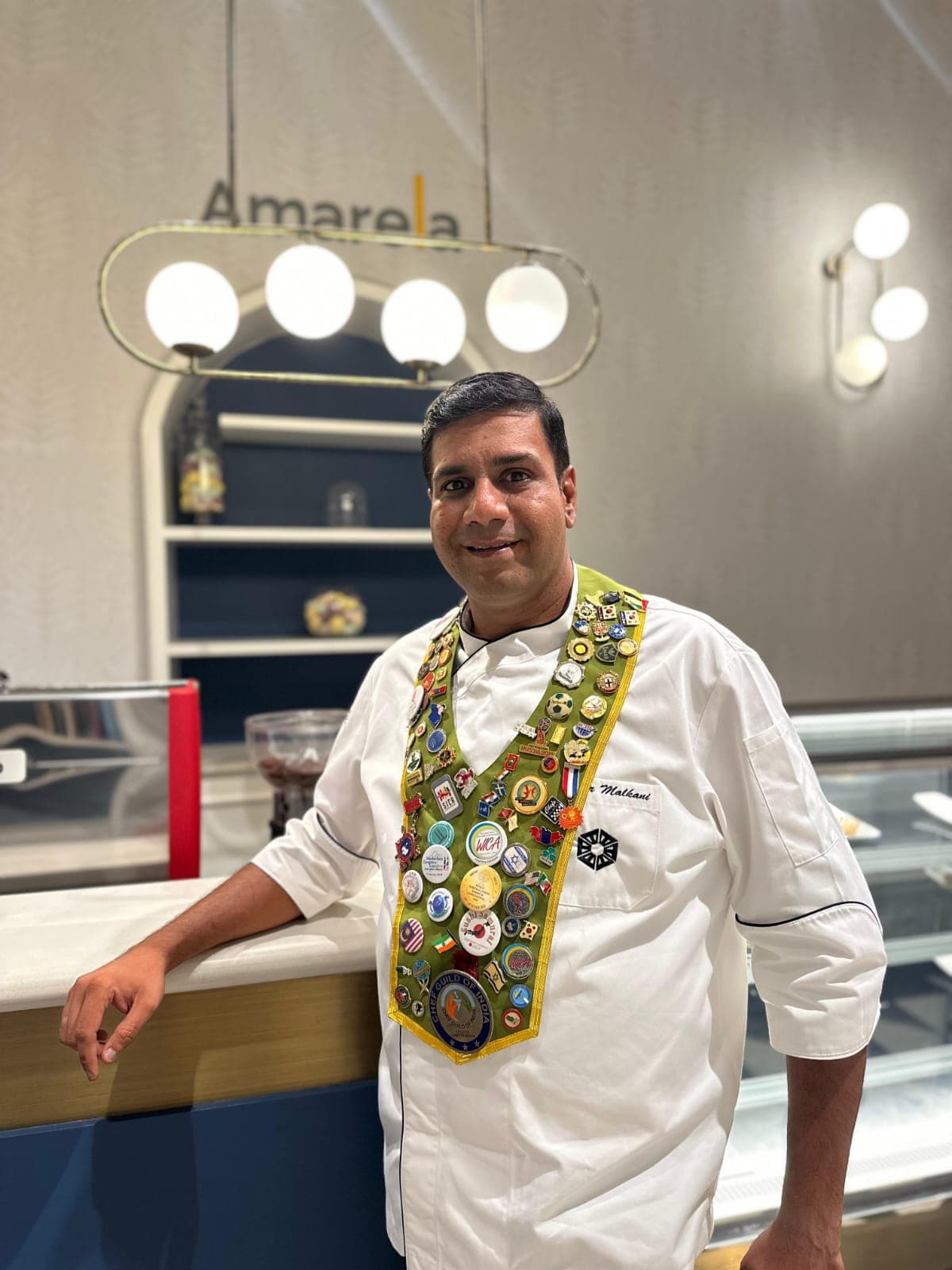

TCA: You’ve been pretty vocal about Indian cacao. What’s actually changed in the last 18 months?
Rohan: Two things. First, growers in Idukki and parts of West Godavari finally have post-harvest setups that don’t kill the bean. Fermentation boxes, controlled drying. The flavour potential has always been there; the processing was the bottleneck. Second, a small group of bean-to-bar makers — Mason & Co, Soklet, Manam — created enough of a domestic market that growers can sell at a premium without exporting.
TCA: You’re using koji-aged butter on a few menus now. Walk us through it.
Rohan: So you take a quality cultured butter, inoculate the surface with koji spores, hold it at around 28°C for 7–10 days. The koji pulls glutamates out of the milk solids. What you get is something between butter and a young cheese — nutty, deeply savoury, but still spreadable. Folded into a brioche dough or finished on a savoury madeleine, it changes the dish completely. It’s also a way to use Indian buffalo cream, which has more fat to work with than cow.
TCA: Pastry has always been the “poor cousin” in Indian kitchens. Is that finally changing?
Rohan: Yes — in pockets. Goa specifically is doing interesting work because the climate forces you to think differently. You can’t make laminated dough at noon in May; you have to design around it. That constraint is producing a more honest pastry style than the imported French-school stuff we’ve been doing for thirty years.
TCA: What should young pastry chefs in India focus on right now?
Rohan: Fermentation. And buying Indian.