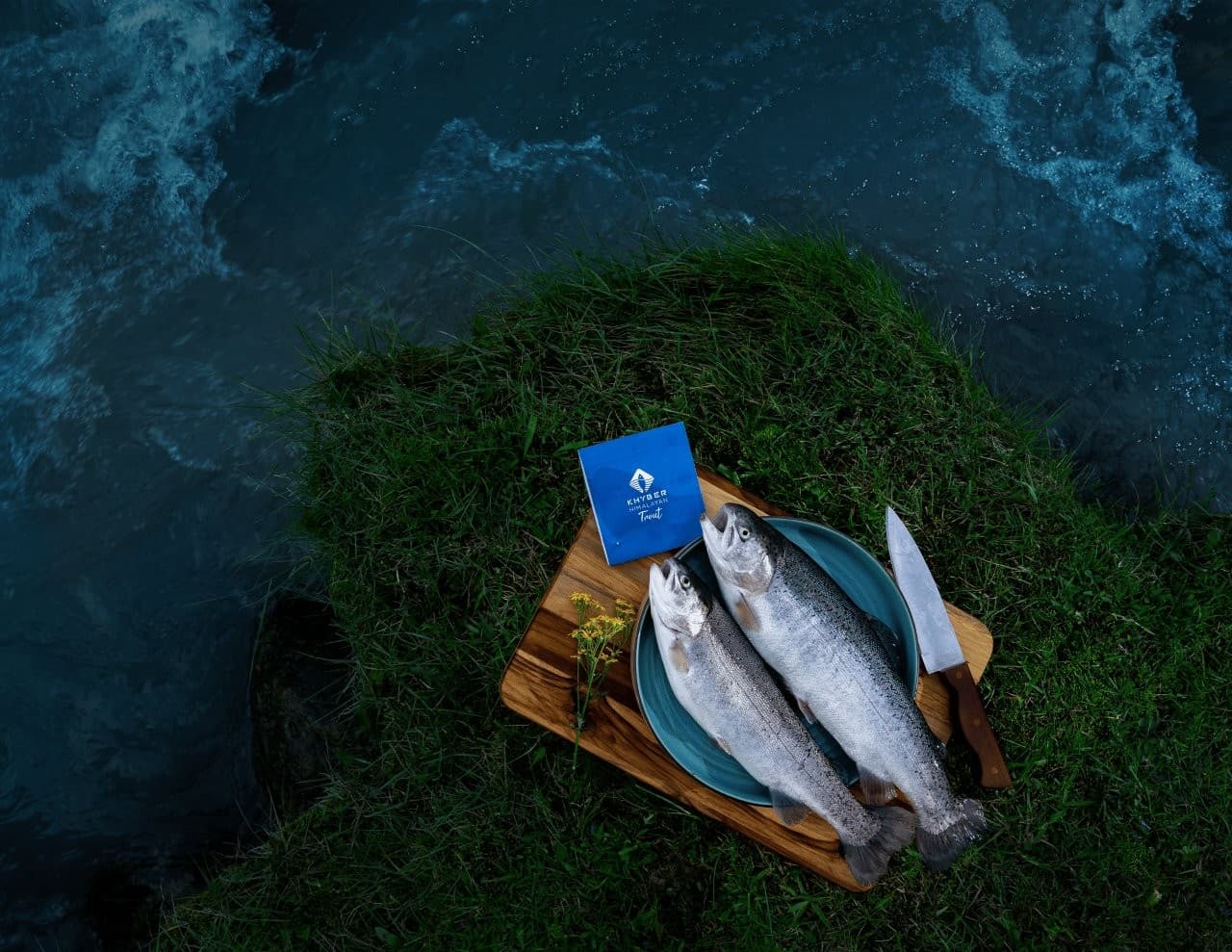
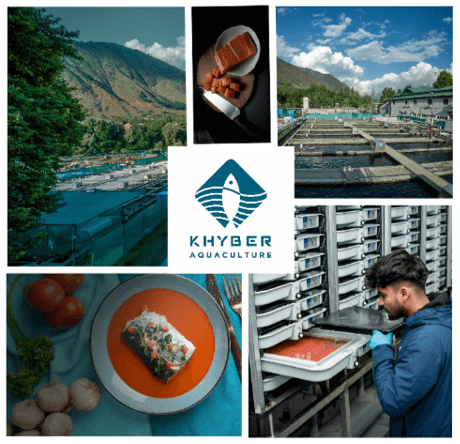
In a significant development for India's aquaculture sector, the Khyber Group, one of Jammu & Kashmir's leading business conglomerates, has launched Khyber Aquaculture, a fully integrated Recirculating Aquaculture System (RAS)-based Himalayan trout farming facility in Kashmir. The company describes the project as the largest of its kind in India and a major step toward building an export-oriented trout ecosystem in the region.
Located at Akhal in Kangan, along the banks of the River Sindh in Ganderbal district, the facility spans eight acres and has been developed with an investment of more than ₹100 crore. Built around advanced aquaculture technology, the farm is designed to recycle and reuse water while maintaining a controlled production environment, enabling year-round trout cultivation.
The facility currently has an annual production capacity of 1,500 metric tonnes and is expected to scale up to 7,000 metric tonnes over the next three to five years. It also houses a hatchery capable of producing up to 20 million fingerlings annually, positioning it as a major supplier for the region's growing trout industry.
According to Umar Tramboo, CMD of Khyber Aquaculture, the project represents a new phase in the development of cold-water aquaculture in Jammu & Kashmir.
"Our technologically superior facility is an expansion of cold-water aquaculture in Jammu and Kashmir. Our cluster model is designed to integrate production, hatcheries, processing and supply chains while supporting more than 300 local farmers under the Holistic Agriculture Development Programme (HADP), through modern aquaculture systems and market access," said Tramboo.
The company expects the project to generate substantial economic benefits for the region. While the integrated farming model is expected to directly support more than 300 local farmers initially, the broader ecosystem, including processing, logistics, packaging, and support services, is projected to create over 3,000 indirect livelihood opportunities.
A key focus of the initiative is sustainability and operational efficiency. The facility utilises RAS technology to significantly reduce freshwater consumption while maintaining optimal fish health. Precision-controlled systems sourced from Denmark, Germany, and France are designed to improve survival rates, lower feed conversion ratios, and reduce disease risks.
The facility uses American and Danish-bred eyed ova (eggs) and maintains water temperatures between 10°C and 14°C with dissolved oxygen levels ranging from 8-12 mg/L, conditions considered ideal for Himalayan trout farming.
Highlighting the long development journey behind the project, Tramboo said:
"It has taken us over five years to be completely ready. But the wait was worth it. With this launch, we plan to revolutionise India's aquaculture sector, introducing new standards for fish health and operational control. We want to be known as a platform for scaling trout farming with data-driven systems and localised adaptation."
The company has also established in-house processing and packaging infrastructure equipped with hyper-hygienic cleaning systems and Modified Atmosphere Packaging (MAP) technology. These systems are expected to extend chilled trout shelf life to up to 10 days and frozen products to six months, supporting both domestic distribution and export opportunities.
The launch comes at a time when demand for premium and sustainably farmed seafood is increasing. According to industry data cited by the company, India's trout market reached 4,698.7 tonnes in 2025 and is projected to grow to 7,964.7 tonnes by 2034, supported by rising consumer awareness of high-protein and omega-3-rich foods, along with government initiatives promoting aquaculture.
With its combination of advanced technology, climate-resilient production systems, farmer participation, and export ambitions, Khyber Aquaculture is positioning Kashmir as a potential hub for premium trout production in India and international markets.